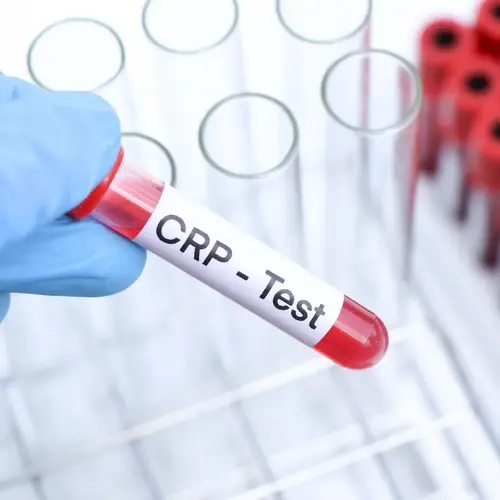
C-Reactive Protein (CRP) is produced by the liver and can increase when inflammation is present. CRP is nonspecific, which means an elevated result does not identify the cause by itself. Healthcare professionals interpret it together with symptoms and other investigations.
C-reactive protein is made by the liver and can rise when inflammation is present. A standard CRP test is often used when a clinician wants to assess or monitor a broad inflammatory response. It does not identify the cause or location of inflammation by itself.
Standard CRP and high-sensitivity CRP (hs-CRP) are not interchangeable. hs-CRP uses a more sensitive method and may be used in selected cardiovascular-risk assessment settings, while a standard CRP is commonly used for inflammatory or infectious conditions. The report should therefore be checked for the exact assay ordered.
Routine CRP is commonly used when a clinician wants a broad measure of current inflammatory activity. It may be repeated to see whether an inflammatory process is improving or worsening, but the trend is meaningful only when interpreted with the illness being monitored. A very low CRP does not make every infection or inflammatory disorder impossible, and an elevated CRP can occur after surgery, injury or other tissue damage. If cardiovascular risk assessment is the purpose, confirm that the requested test is high-sensitivity CRP rather than standard CRP.