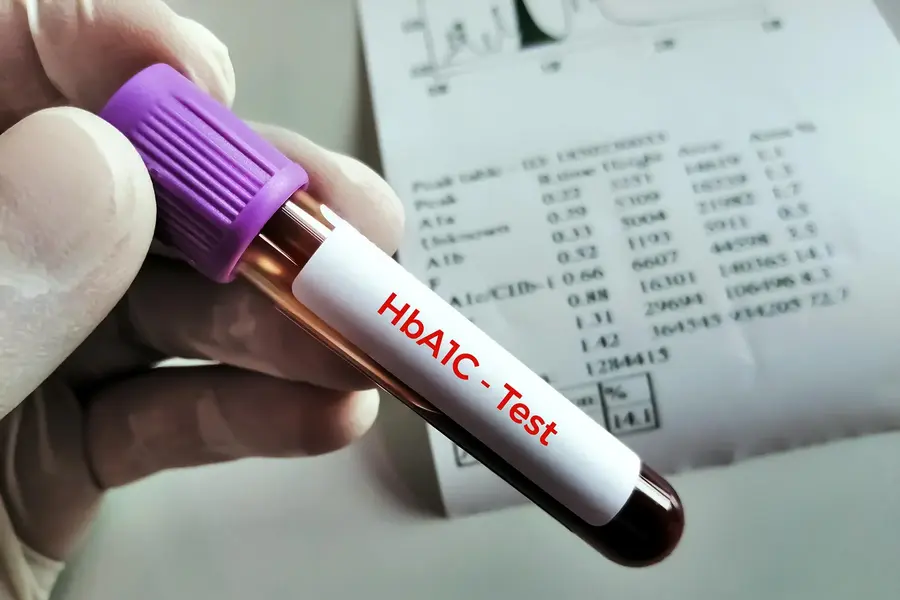
HbA1c measures the proportion of haemoglobin with glucose attached to it. Because red blood cells circulate for weeks, the result reflects longer-term glucose exposure rather than a single moment. Interpretation can be affected by some blood conditions, so results should be considered with clinical context.
HbA1c measures the percentage of haemoglobin with glucose attached to it and reflects average glucose exposure over roughly two to three months. It can be used for diabetes diagnosis in appropriate patients and is also used to monitor glucose management over time.
Unlike fasting glucose, HbA1c does not usually require fasting. However, anything that changes red-cell lifespan or haemoglobin can make the result less representative of average glucose. Severe anaemia, recent blood loss or transfusion, some haemoglobin variants, kidney failure, liver disease and pregnancy can all affect interpretation, so a clinician may prefer plasma glucose testing in some situations.
Because HbA1c reflects a longer period than a single glucose measurement, it is useful for identifying persistent glucose elevation and for monitoring established diabetes. It does not require fasting. When HbA1c and measured glucose disagree substantially, clinicians may consider conditions that change red-cell turnover or haemoglobin structure and may use fasting glucose, repeated glucose measurements or another marker. The laboratory method and the person’s clinical history therefore matter, especially when the result sits close to a diagnostic boundary.