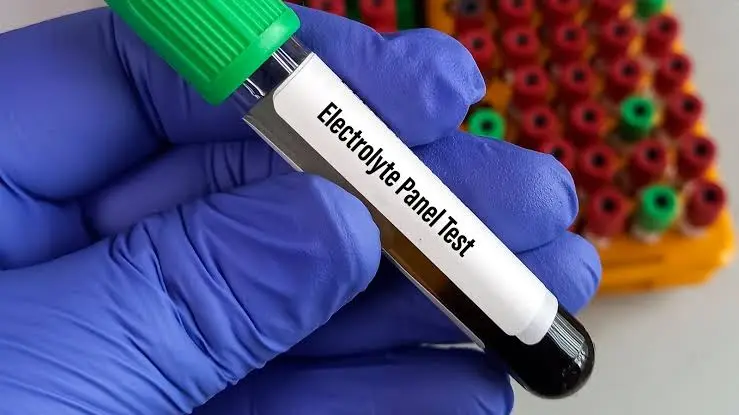
Electrolytes are charged minerals in the blood. A panel commonly includes sodium and potassium, with chloride and bicarbonate included by many laboratories. The exact profile varies and can be interpreted alongside kidney function, hydration and medicines.
An electrolyte panel measures charged minerals that help regulate fluid balance, nerve activity, muscle contraction and acid-base balance. Common components include sodium, potassium, chloride and bicarbonate/total CO₂. The exact panel may vary, and electrolytes are often included in a basic or comprehensive metabolic panel.
Electrolyte abnormalities can be clinically important, especially potassium changes, but the number needs context. Vomiting, diarrhoea, kidney function, hormones, medicines, IV fluids and sample handling can all change the pattern. A haemolysed blood specimen can falsely raise potassium and may need recollection.
Electrolyte panels are frequently ordered with creatinine and urea because kidney function, hydration and electrolyte balance are closely connected. Potassium deserves special attention to specimen quality: difficult blood collection or delayed processing can damage blood cells and release potassium, producing a falsely high value. Sodium abnormalities often need assessment of fluid status and sometimes glucose or osmolality. Bicarbonate can change with acid-base disorders, vomiting, diarrhoea or kidney problems. Clinicians therefore interpret the panel as a set of related measurements rather than separate isolated numbers.