Skip to content
Multan home sample collection 9AM–10PM
Simple bookingPartner diagnostic labsDigital reports
Routine Blood Tests

CBC / Complete Blood Count

CBC measures several types of blood cells and is one of the most commonly requested routine blood tests.

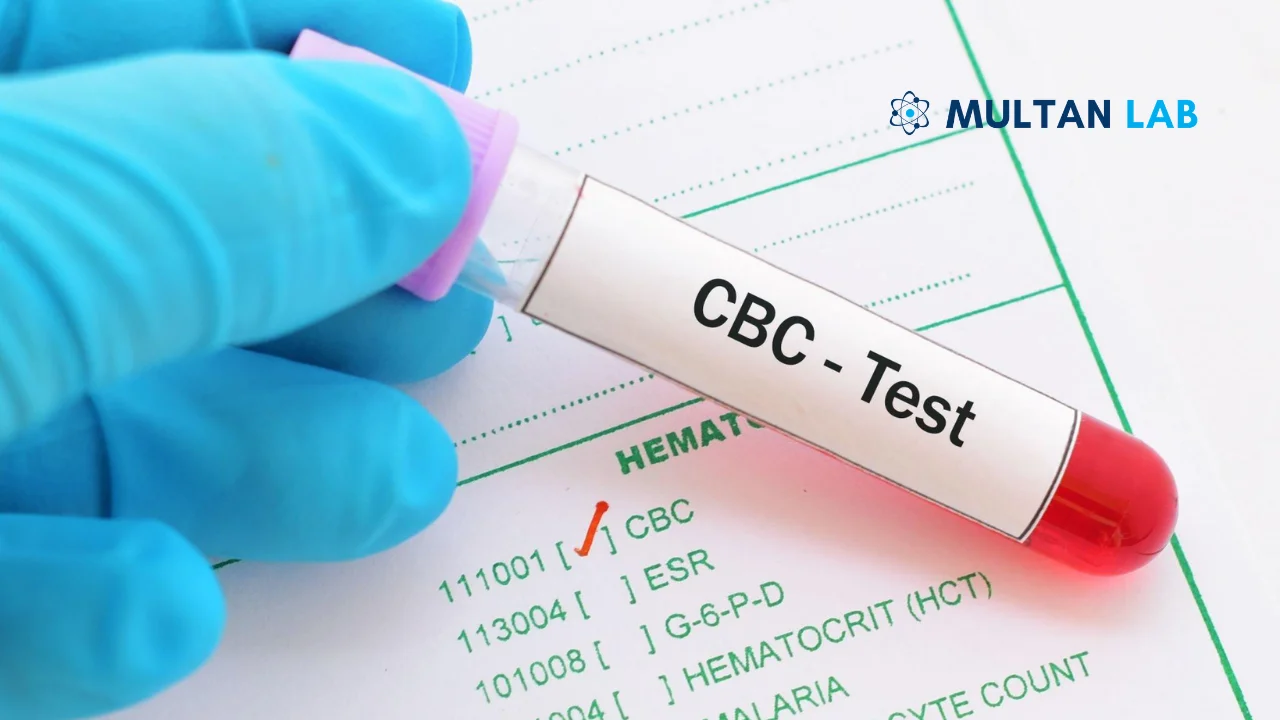
CBC Test at Home in Multan — Complete Guide 2026
SampleBlood
PreparationNo fasting for CBC alone; confirm if other tests are ordered at the same time.
Home collectionAvailable for eligible bookings
Report timeConfirmed with the laboratory
About the test

What is CBC?

Important

Reference ranges and preparation can vary between laboratories and test combinations. Use the instructions and reference interval supplied for your own test order.

A Complete Blood Count (CBC) is one of the most frequently requested blood tests. It measures several major blood-cell components, including red blood cells, white blood cells, haemoglobin and platelets. Many reports also include red-cell indices such as MCV, MCH and MCHC, and may include a white-cell differential.

A CBC does not diagnose a condition by itself. Doctors interpret the pattern of results together with symptoms, medical history, examination and other investigations. For example, a low haemoglobin level can have many possible causes, and an abnormal white-cell count can occur for different reasons. The reference interval printed by the reporting laboratory should be used because ranges can vary with age, sex, laboratory method and clinical context.

CBC is often ordered as part of a general assessment, before some procedures, when symptoms such as unexplained tiredness or recurrent infection are being evaluated, or to monitor an existing condition or treatment. If your prescription includes other tests at the same visit, preparation may be different from CBC alone.

A CBC is best understood as a panel rather than a single number. Red-cell measurements help describe oxygen-carrying capacity and cell size, white-cell measurements describe the circulating immune-cell population, and platelets relate to clot formation. A CBC with differential also reports the proportions or absolute counts of neutrophils, lymphocytes, monocytes, eosinophils and basophils.

The pattern matters more than any one result. For example, haemoglobin, haematocrit and MCV are often interpreted together when anaemia is being considered. A raised or reduced white-cell count can have many causes, while platelet changes may need correlation with medicines, recent illness, bleeding history and sometimes a blood film. The page therefore shows common adult example ranges but keeps the laboratory’s own range prominent.

What it measures

Common markers included

Haemoglobin (Hb)Oxygen-carrying protein in red blood cells.
Red blood cells (RBC)Red blood cell count and related indices.
White blood cells (WBC)White blood cell count and differential where included.
PlateletsPlatelet count used in clotting assessment.
MCV / MCH / MCHCCommon red-cell indices included in many CBC reports.
Why it may be requested

Why might this test be requested?

A healthcare professional may request a CBC when they want a broad view of the cellular components of blood. Common reasons include investigating anaemia, checking for changes in white blood cells during infection or inflammation, reviewing platelet numbers, monitoring certain medicines or treatments, or obtaining a baseline before a procedure. It is also commonly included in broader health panels.

The reason for testing matters when the results are interpreted. The same value can mean different things depending on symptoms, age, pregnancy status, hydration, recent illness and other laboratory findings.

Understanding results

How are the results interpreted?

CBC results are usually read as a pattern rather than one number in isolation. Haemoglobin and red-cell indices can help a clinician characterize an anaemia pattern. White-cell counts and the differential can provide clues about immune or inflammatory changes. Platelet results are considered in the context of bleeding, clotting, medicines and other clinical information.

A result outside the laboratory reference interval does not automatically mean disease, and a result inside the interval does not always rule out a problem. Your healthcare professional may repeat the test or order additional investigations if the clinical picture requires it.

Typical reference values

Common values and expected results

Use your own lab report first

These are common adult examples for orientation only. The reference interval printed on the patient's own laboratory report takes priority because methods, units, age, sex, pregnancy and clinical context can change the expected range.

MeasurementTypical valueContext
White blood cells (WBC)3.4–9.6 ×10⁹/LAdult example range from Mayo Clinic; laboratories may use different intervals.
Haemoglobin — male13.2–16.6 g/dLAdult male example.
Haemoglobin — female11.6–15.0 g/dLAdult female example.
Haematocrit — male38.3–48.6%Adult male example.
Haematocrit — female35.5–44.9%Adult female example.
Platelets — male135–317 ×10⁹/LAdult male example.
Platelets — female157–371 ×10⁹/LAdult female example.
Result context

What can affect the result?

Hydration and recent illness

Dehydration can concentrate blood values, while recent infection or inflammation may change white-cell counts.

Pregnancy, age and sex

Several CBC reference intervals differ by age, sex and pregnancy status.

Medicines and treatment

Some medicines, chemotherapy and other treatments can change white cells, haemoglobin or platelets.

Important context

What this test cannot tell you on its own

CBC is a useful screening and monitoring test, but it cannot explain the cause of an abnormality on its own. It does not replace examination, clinical history or targeted tests such as iron studies, vitamin levels, cultures or imaging when those are indicated.

Specimen & collection

Collection notes

CBC is usually collected in an EDTA blood tube. Fasting is not required for a CBC by itself, but another test ordered at the same visit may require fasting. A clotted or poorly filled specimen can make some counts unreliable and may need recollection.

Before collection

How should you prepare?

CBC alone usually does not require fasting

If your prescription includes glucose, lipids or other tests, preparation may be different.

Share the complete prescription

This helps confirm whether other tests are being collected in the same visit.

Home sample collection

Prefer to have the sample collected at home?

For eligible bookings, MultanLab can help arrange sample collection from your home in Multan. The sample is then processed by the selected diagnostic laboratory partner.

Send the test or prescriptionConfirm the complete test order first.
Confirm preparation and timingGet the practical instructions before collection.
Partner laboratory processingDiagnostic testing is performed by the laboratory partner.
Arrange Home Collection
Common questions

Frequently asked questions

MCV is the mean corpuscular volume, an estimate of the average size of red blood cells. Clinicians often read it with haemoglobin, haematocrit and other red-cell indices when describing an anaemia pattern.

No. Haemoglobin is one measurement within a CBC. A CBC also reports red-cell counts and indices, white cells and platelets, and may include a white-cell differential.

A CBC can show changes in white blood cells that may occur with infection, but it cannot identify the infection or its cause by itself. Symptoms, examination, cultures or other tests may be needed.

Haemoglobin, haematocrit and some cell-count intervals can differ with sex and life stage. Laboratories also use their own validated reference intervals, so the range printed on the report should be used.

It adds information about major white-cell types such as neutrophils, lymphocytes, monocytes, eosinophils and basophils. The differential may be reported as percentages, absolute counts, or both.

For eligible bookings, a trained collector can draw the sample at home. The complete prescription should be shared first so tube type and preparation for any additional tests can be confirmed.

Medical quality

Reviewed information, visible sources.

Ready to arrange CBC?

Send the test name or prescription and confirm preparation, current price and collection availability.

Call WhatsApp